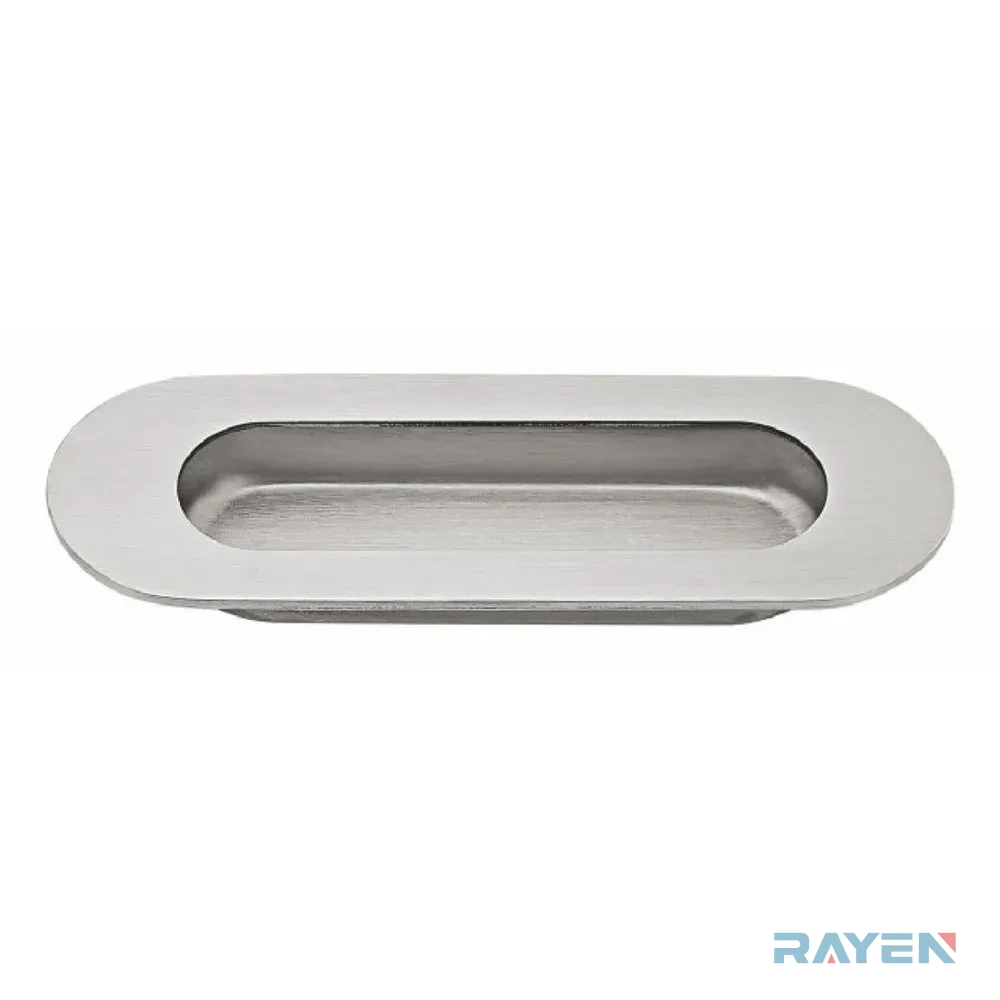
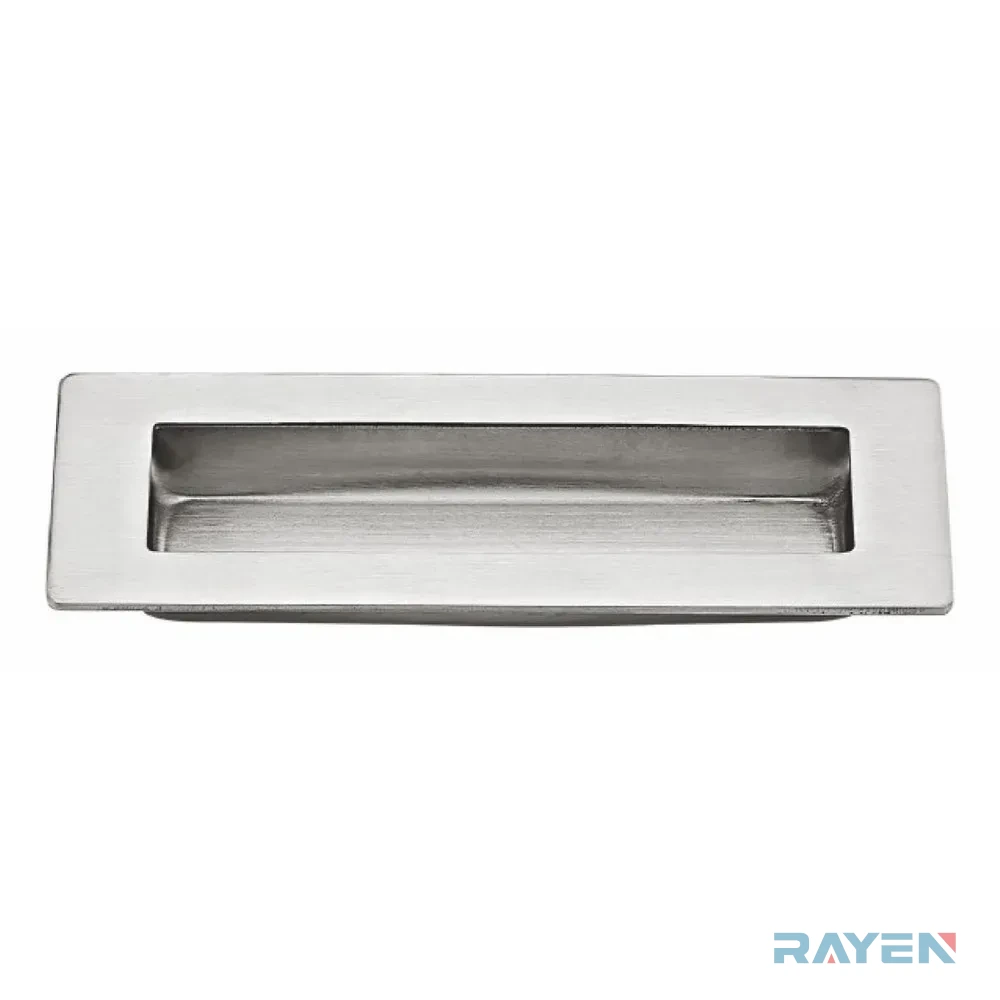
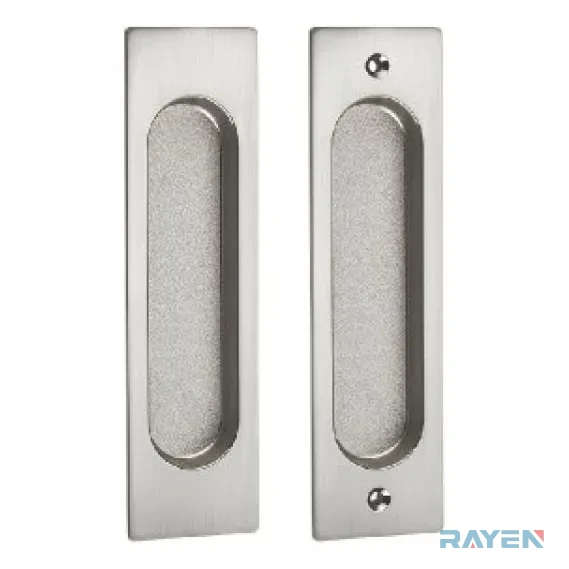
PRE150 Recessed Pull for Pocket and Sliding Doors: Cutout, Depth and Door Thickness
Updated 2026-11-09 · RAYEN 雷茵
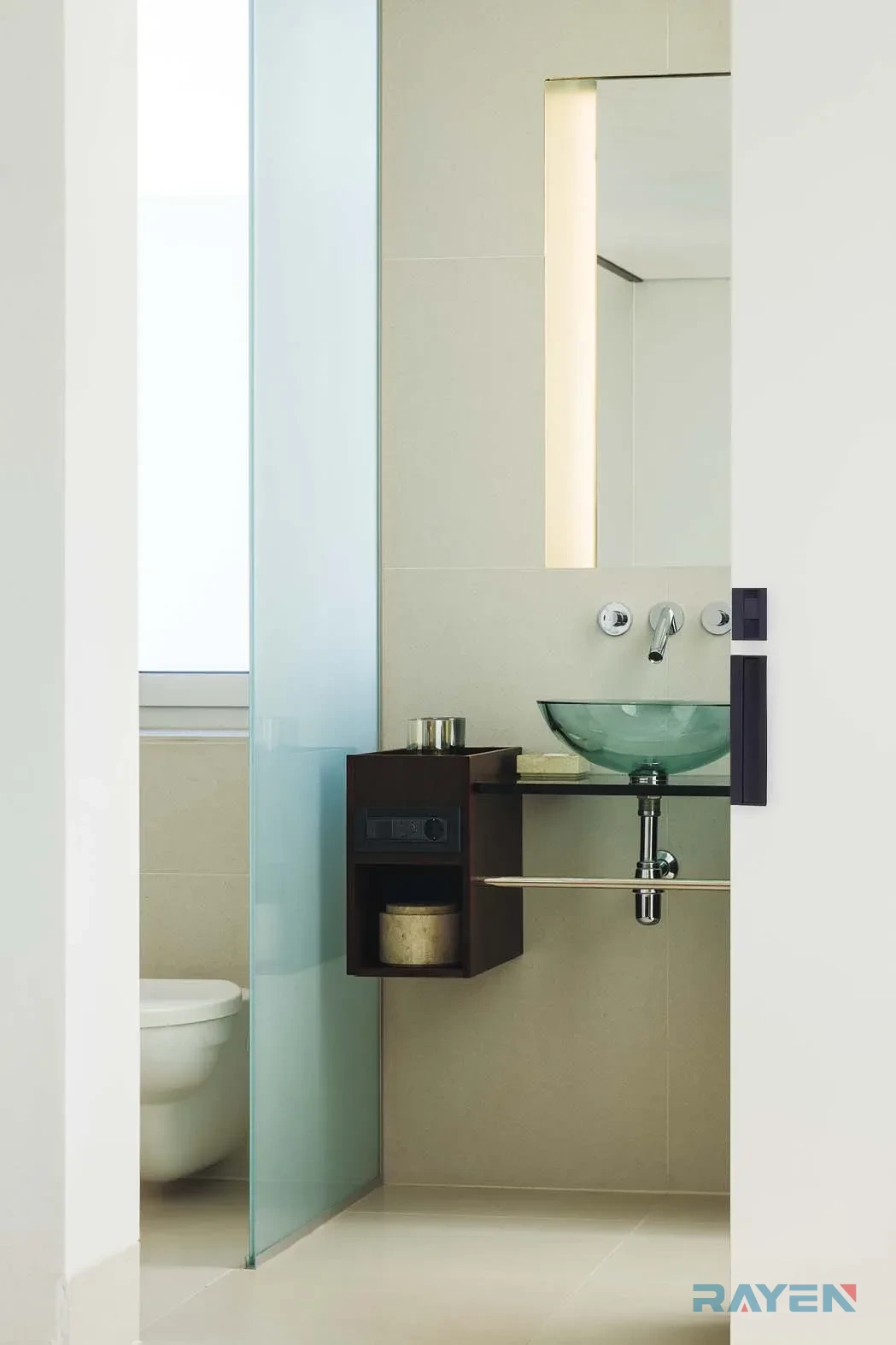
A pocket door slides into the wall, so anything that sticks out stops it short. PRE150 is cut into the door instead. The photographs show it on timber sliding doors in hotel rooms, bathrooms and dressing areas, and on a glazed bathroom door.
What are the sizes of PRE150?
- Face plate: 50 × 180mm.
- Door cutout: 42 × 174mm on a 40mm door; 46mm wide on a 45mm door.
- Recess depth: 26mm, with a 20mm variant.
- Fixing centres: P=75mm, twice, down the face plate.
- Door thickness: 40mm, with a 45mm version available.
- Material: brass. Finishes: antique brass and satin brass.
The face plate is 4mm wider and 6mm longer than the cutout on a 40mm door, so its edge covers the cut line all round. That is the point of the plate: the router edge never shows.
Which version do I need: 40mm or 45mm?
Measure the finished door. The model is drawn for a 40mm door and lists a 45mm version, with the cutout widened to 46mm. For any other thickness, send the door section and we will tell you whether one of the two fits.
The 20mm recess variant is the one to ask about when the door has less depth to give, for example where something runs inside the leaf near the edge. Choose the depth before you cut.
How do you cut the door for PRE150?
- Mark the cutout at 42 × 174mm, centred on the hand position.
- Rout to the recess depth you ordered: 26mm or 20mm.
- Check that the face plate covers the cut on all four sides before you fix it.
- Fix through the face plate at the marked centres.
Leave the cutout to the end of the door finishing, so the edge is not damaged during sanding or painting. On a hollow-core door, build a solid block into the leaf where the cutout goes.
Where on the door does it go?
The photos show it close to the leading edge of the door, at hand height, on the face that stays visible when the door is open. On a pocket door that slides fully into the wall, put the pull where the hand can still reach it with the door parked. Many sliding doors need a second, smaller pull on the edge itself; ask us if you need one.
PRE150 or a smaller flush pull?
PRE150 is the large, deep option. For a lighter door, our stainless flush pulls are shallower and smaller: SC-901 SS is oval at 120mm or 150mm long, and SC-904 SS is 150 × 50mm. Zinc alloy YMKH-802 is 45 × 180mm for 38-50mm doors. All of them are compared in flush pulls and ring pulls and sliding door flush pull sizes.
Which finish should you choose?
Antique brass gives an aged, darker tone; satin brass is lighter and even. Both are finishes on a brass body. In the hotel photographs the pull sits against warm timber, where either tone works; on a pale door, satin brass reads lighter. Match the hinges and any hook lock on the same door; see sliding door hook lock sizes.
What to write on your order
PRE150, door 40mm (or 45mm version), recess 26mm (or 20mm), antique brass or satin brass, quantity, and how many doors take one pull and how many take two.
Next step
Send a section through your door at the pull position to [email protected], and we will confirm the version and the cutout before you rout anything. For a quick question about finish or samples, message the factory owner on WhatsApp from the contact page.
Questions buyers ask
What size cutout does the PRE150 recessed pull need?
42 × 174mm on a 40mm door, 46mm wide on a 45mm door, with a 26mm recess or the 20mm variant.
What door thickness does PRE150 fit?
40mm, with a 45mm version available. For other doors, send us the door section first.
What material is PRE150?
Brass, listed in antique brass and satin brass.