Tubular Lever Lock Backset: 60-70mm, and How to Measure It
Updated 2026-11-05 · RAYEN 雷茵
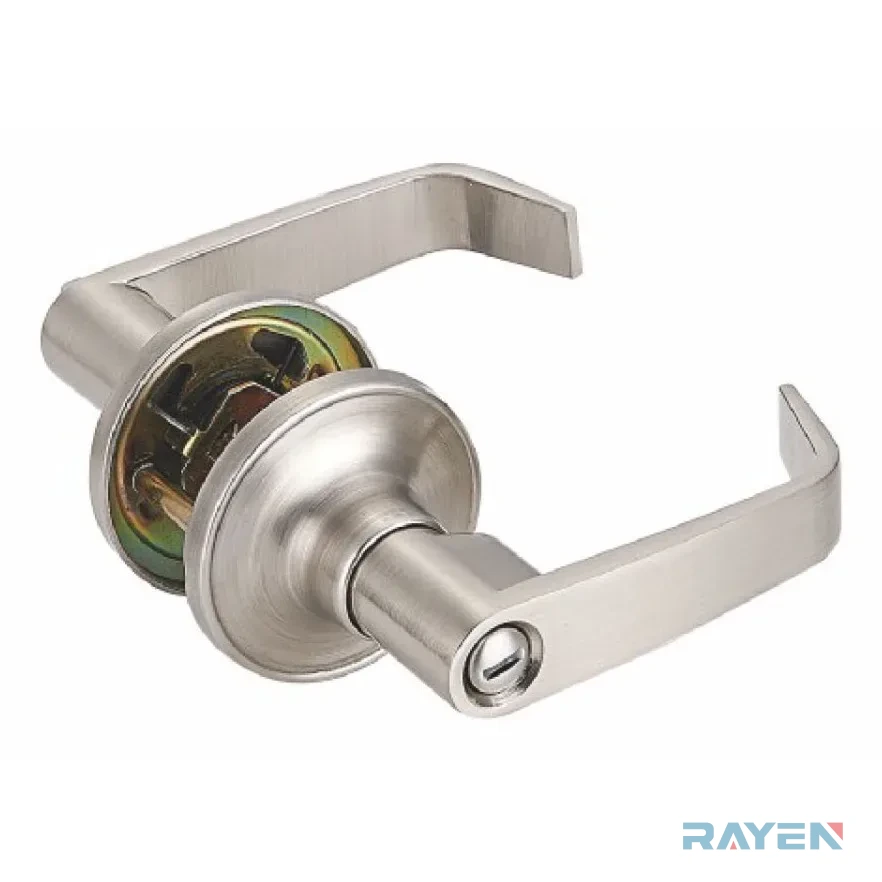
We list 10 tubular lever locks, in two series: the 80s and the 90s, each with BK and ET versions. This guide covers the one size that matters most on this kind of lock, and the rest of what you need before you drill.
What is backset on a tubular lever lock?
Backset is measured on the face of the door, from the door edge to the centre of the big round hole that the lock passes through. It tells you how far from the edge the lever sits. Get it wrong and the latch will not line up with the hole.
All of our tubular lever locks list the same backset of 60-70mm, so this one figure holds across the range.
| Model | Backset | Door thickness | Overall length | Rose diameter | Material |
|---|---|---|---|---|---|
| BK801 | 60-70mm | 30-50mm | 106mm | Ø65mm | Zinc Alloy / Stainless Steel |
| BK802 | 60-70mm | 30-50mm | 120mm | Ø65mm | Zinc Alloy / Stainless Steel |
| BK902 | 60-70mm | — | 120mm | — | Zinc Alloy |
| BK901 | 60-70mm | — | 125mm | Ø75mm | Zinc Alloy |
| BK903 | 60-70mm | — | 125mm | Ø65mm | Zinc Alloy |
| ET801 | 60-70mm | 30-50mm | — | — | Zinc Alloy / Stainless Steel |
| ET802 | 60-70mm | 30-50mm | — | — | Zinc Alloy / Stainless Steel |
| ET901 | 60-70mm | — | — | — | Zinc Alloy |
| ET902 | 60-70mm | — | — | — | Zinc Alloy |
| ET903 | 60-70mm | — | — | — | Zinc Alloy |
The ET models share the backset. Confirm their lever length and rose size on the drawing.
What is a tubular lever lock?
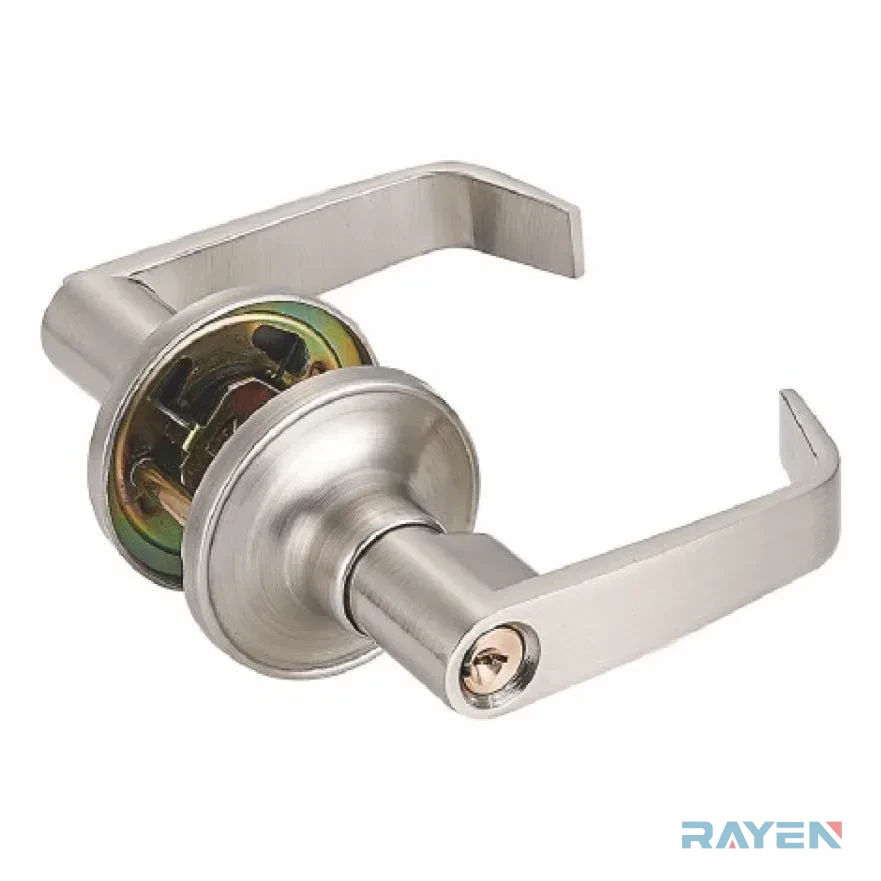
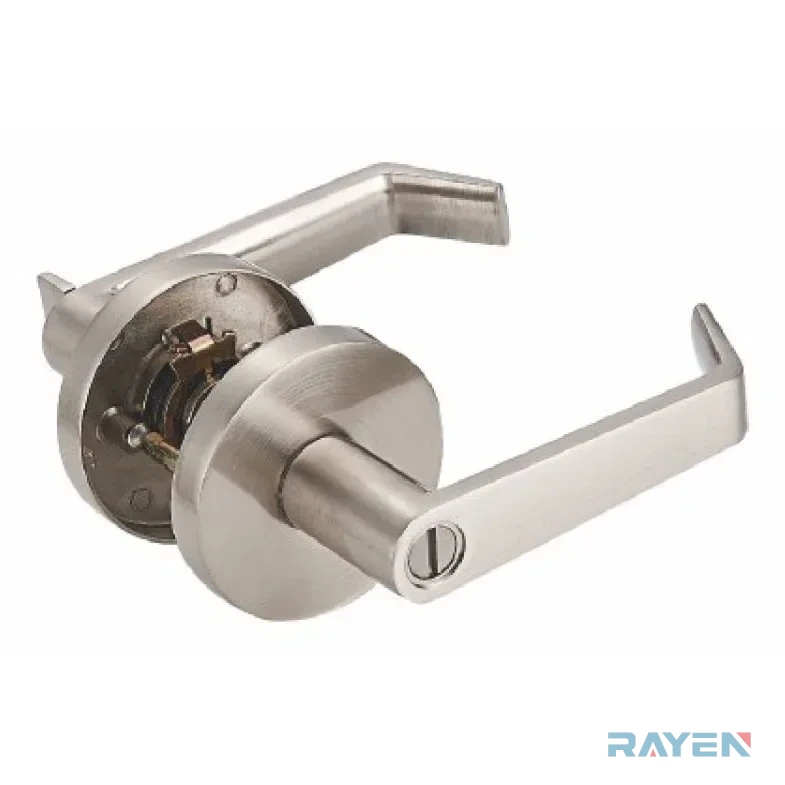
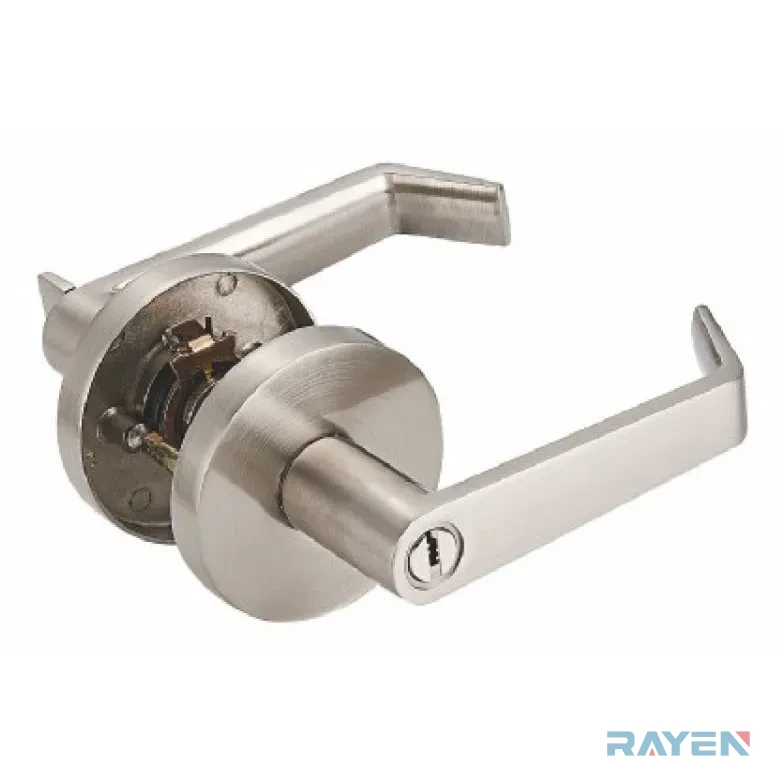
A tubular lock is a complete set: two lever halves with their roses, and a separate latch that goes into the edge of the door. It needs no mortise pocket. You can see the parts in our pictures. The latch photos for ET801 and ET901 show a tube-shaped latch body with a square drive hole and a faceplate with two screw holes. The drawing of BK801 shows parallel bars running between the two roses. Those are the parts that pass through the door and hold the two halves together.
In China the trade calls this a three-bar lever lock. Importers may see it as a tubular lock or a tubular lever set.
Don't confuse it with a cylindrical lock. Our KQ101 SS shows the difference: a solid round chassis sits between the two knobs and fills the hole. In a tubular lock there is no chassis in the hole, only the latch and the bars.
It is also not a mortise lever. A mortise lever takes a lock case, with a code such as 7255, and that case fixes one set of distances. Read lock case numbers for those.
How do BK and ET differ?
The photos show the difference on the lever itself. BK801 has a slot in the neck of the outside lever. ET801 has a keyway there. The levers and roses are otherwise alike: BK802 matches ET802, BK901 matches ET901, and so on. So choose the series by shape, then BK or ET by whether that door needs a key. Confirm the function on the order, because a slot and a key are not interchangeable.
How do the 80s and the 90s differ?
- The 801 and 802 are zinc alloy or stainless steel and list door thickness 30-50mm. BK801 is 106mm long and BK802 120mm, both on an Ø65mm rose. The finishes are brushed stainless and brushed nickel.
- The 901, 902 and 903 are zinc alloy. BK901 is 125mm long on an Ø75mm rose. BK902 is 120mm and BK903 125mm. For this series, confirm your door thickness with us.
Check lever length near a wall or a door stop, and rose size against any marks left by an old lock. A lever at 125mm reaches further than one at 106mm.
The latch faces differ as well: ET801 has rounded faceplate corners, and ET901 has square ones. If you are fitting into an existing recess, compare the outline first.
How do you measure backset on a door?
- New door: mark the height, then measure in from the door edge to where the bore centre will be. Keep inside 60-70mm.
- Existing door: measure from the door edge to the middle of the existing hole. If you can only measure to the side of the hole, add half its diameter.
- Bevelled edge: measure at the high side, then confirm with your fitter.
- Thick facing or an edge strip: measure from the finished edge, not from the core.
If the old hole sits outside the range, these locks are the wrong answer and a new latch will not rescue it. Send us the measurement.
What else must you check before drilling?
- Door thickness: 30-50mm on the 801 and 802. See lever handle door thickness for the mortise ranges.
- Bore and edge hole sizes: follow the drilling template for the model. Ask us for it, and do not assume a size from another lock.
- Handing: check whether the lever needs setting for a left or right door.
- Strike: the door frame needs a strike that matches the latch.
What to write on your order
One line per door type: model, finish, backset, door thickness, handing and quantity. For example: ET801, brushed nickel, backset 60mm, door 30-50mm, with your measured thickness beside it. If you are matching doors already drilled, send the edge-to-centre measurement and a photo of the old latch, and we will check it before you order.
Questions buyers ask
What backset do your tubular lever locks have?
All 10 models list 60-70mm, measured from the door edge to the centre of the bore.
What door thickness does a tubular lever lock fit?
BK801, BK802, ET801 and ET802 list 30-50mm. Confirm the 901, 902 and 903 with us.
Is a tubular lock the same as a cylindrical lock?
No. A cylindrical lock has a solid chassis in the hole, as on KQ101 SS. A tubular lock has no chassis, just a separate latch and the parts joining the two halves.