Toilet Occupancy Indicators: Surface Bolts, Rose Sets and Thumb Turns
Updated 2026-11-08 · RAYEN 雷茵
How does an occupancy indicator work?
The user turns a knob or thumb turn inside. That throws the bolt and turns a sign on the outside to show the room is in use. Most indicator sets also have a slot on the outside, so staff can open the door with a coin or a tool in an emergency. That slot is for rescue, not for security.
We list 8 parts in this group. They come in three builds.
Surface indicator bolt
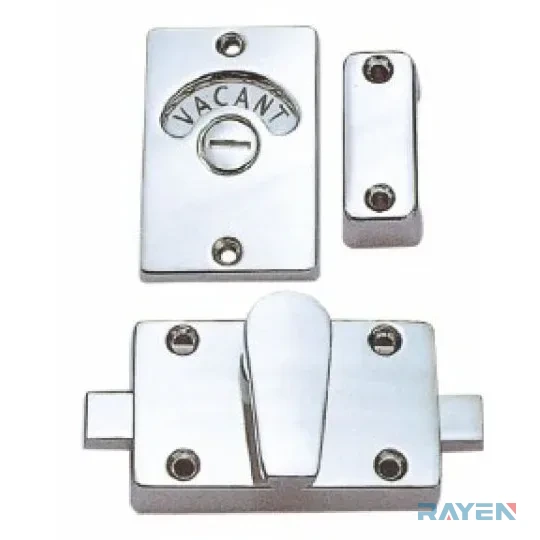
D3872 CP is a complete bolt that screws to the face of the door, with its keep on the frame. The bolt is 66 × 40.8mm and the indicator plate is 42 × 62mm. The photograph shows VACANT in the window. It is zinc alloy, in Brushed Nickel or Polished Chrome.
This build suits cubicle doors and doors with no lock case. Nothing is cut into the door edge, so it is quick to fit and quick to replace. Check that the door face has room for the plate beside the frame, and that the keep has something solid to fix to.
Rose set with a mortise lock
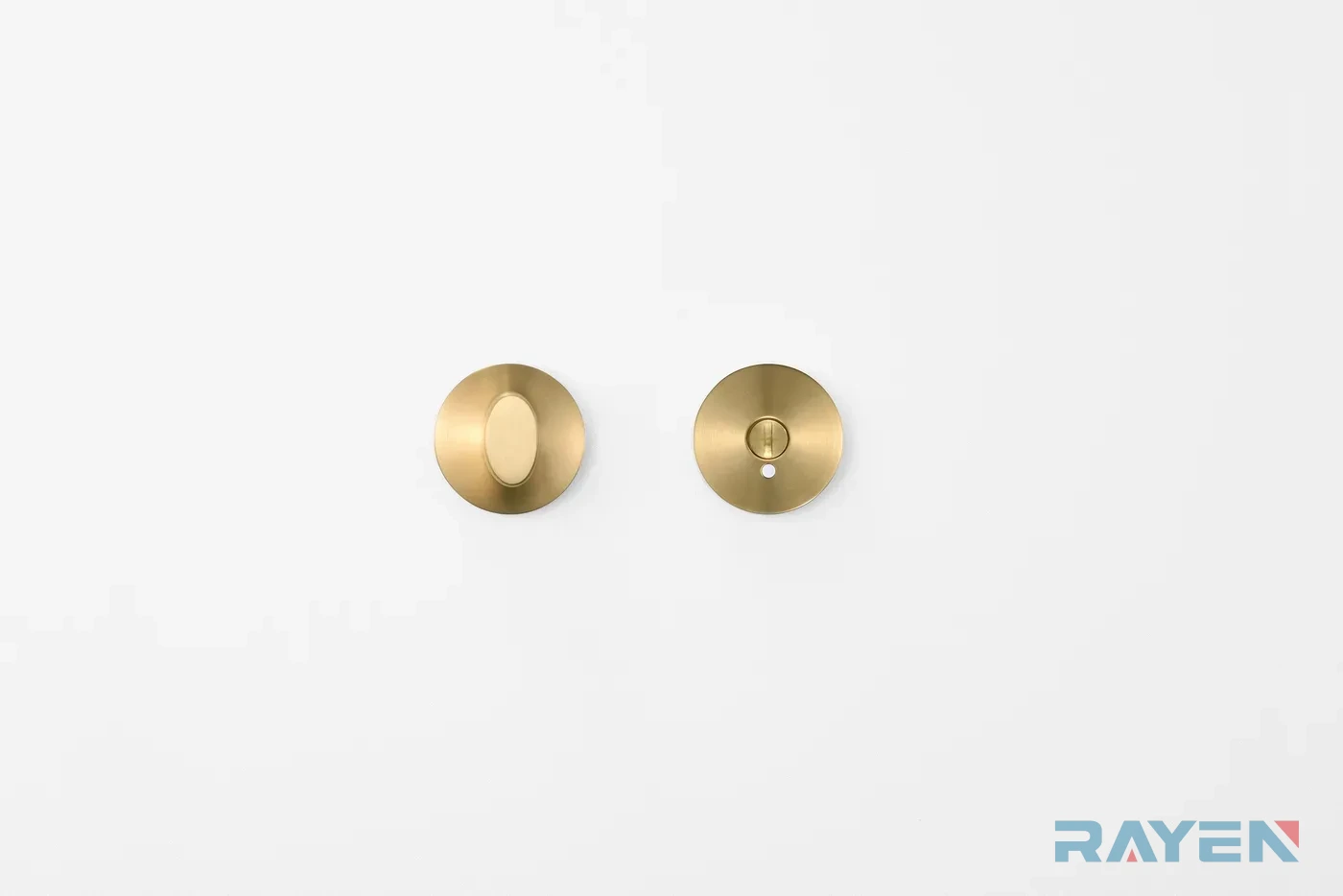
PRE_W173 is a pair of round roses: a thumb turn inside, and an outside rose with an emergency slot and a small coloured indicator. The roses are Ø35mm and 6mm thick, with a 22.5mm projection. It is stainless steel, in Satin stainless or Matt black.
The scene photographs show it under a lever handle on a mortise lock. That is the build for hotels, offices and homes where every door should look the same and the toilet door should not look like a cubicle. It needs a lock case with a bathroom function. Confirm the spindle and the door thickness with us, because the roses only work if the spindle reaches through the door.
Thumb turns
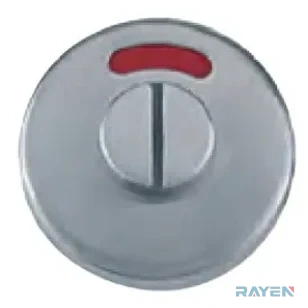
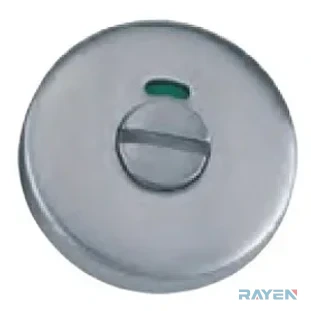
TT001, TT002, TT005 and TT006 are stainless thumb turns on round roses, each with a different grip shape. TT003 has a red window and TT004 a green window, for indicator use. Their sizes come on the drawing, so ask us before you plan the door.
Which one should you choose?
- Cubicle or partition door, no lock case: the surface bolt, D3872 CP.
- Timber door with a mortise lock, matched to the building's levers: the rose set, PRE_W173.
- An existing lock case that needs a new turn and indicator: the TT thumb turns, matched to the spindle.
Accessible toilets often have their own rules for the lock and the turn. Check your local rules before you specify, and read them against our drawing.
What should you measure?
- The door thickness. Partition doors can be thin, and the spindle must suit them.
- The face width beside the frame, for a surface bolt.
- The lock case and its function, for a rose set.
- Which side is outside, so the indicator faces the corridor.
- The finish on the levers and hinges.
A worked example: an office floor fit-out with timber doors, black levers and mortise locks. The toilets should match the other doors. PRE_W173 in Matt black goes under the same lever, on Ø35mm roses with a 22.5mm projection. Send us the lock case and door thickness, and we confirm the spindle before the order.
What to write on the order
Give the model, the finish, the door thickness and which side is outside. For example: Indicator, D3872 CP, zinc alloy, Polished Chrome, for cubicle door. Or: Indicator, PRE_W173, stainless steel, Matt black, with lock case and door thickness stated. Quantities, price and delivery are confirmed per order. See the hardware accessories, or send us the door schedule.
Questions buyers ask
How big is a toilet indicator plate?
On D3872 CP the indicator plate is 42 × 62mm and the bolt is 66 × 40.8mm.
Can an indicator be opened from outside?
Most indicator sets have an emergency slot on the outside for staff. PRE_W173 shows one on its outside rose.
Which indicator fits a door with a mortise lock?
PRE_W173, a stainless rose set on Ø35mm roses. Confirm the spindle and door thickness with us.