How to Rout a Concealed Hinge: Cutter, Pocket and Door Thickness
Updated 2026-11-09 · RAYEN 雷茵
How do you choose by door thickness?
Start here, because a door that is too thin for the hinge cannot be saved by careful routing.
| Model | Minimum door thickness | Maximum load capacity (2 hinges) | Size | Maximum door width |
|---|---|---|---|---|
| R-CS30 | 20mm | 30kg | 16x70mm | 500mm |
| R-CS40 | 25mm | 40kg | 19x95mm | 900mm |
| R-CS40X | 25mm | 40kg | 19x95mm | 900mm |
| R-CS60 | 33mm | 60kg | 25x117mm | 900mm |
| RY100 | 33mm | 100kg | 25x138mm | 1000mm |
| RY150 | 33mm | 100kg | 25x150mm | 1000mm |
| R-CS80 | 36mm | 80kg | 28x117mm | 1000mm |
| R-CS80X | 36mm | 80kg | 28x117mm | 1000mm |
| RY80 | 38mm | 80kg | 29x113mm | 1000mm |
| RY177 | 38mm | 120kg | 28x177mm | 1000mm |
| R-CC120J | 40mm | 120kg | 30x160mm | 1000mm |
| R-CF120 | 40mm | 120kg | 30x160mm | 1000mm |
| RY80J | 40mm | 80kg | 30x160mm | 1000mm |
| RY120 | 40mm | 120kg | 30x160mm | 1000mm |
| RY140 | 40mm | 120kg | 30x140mm | 1000mm |
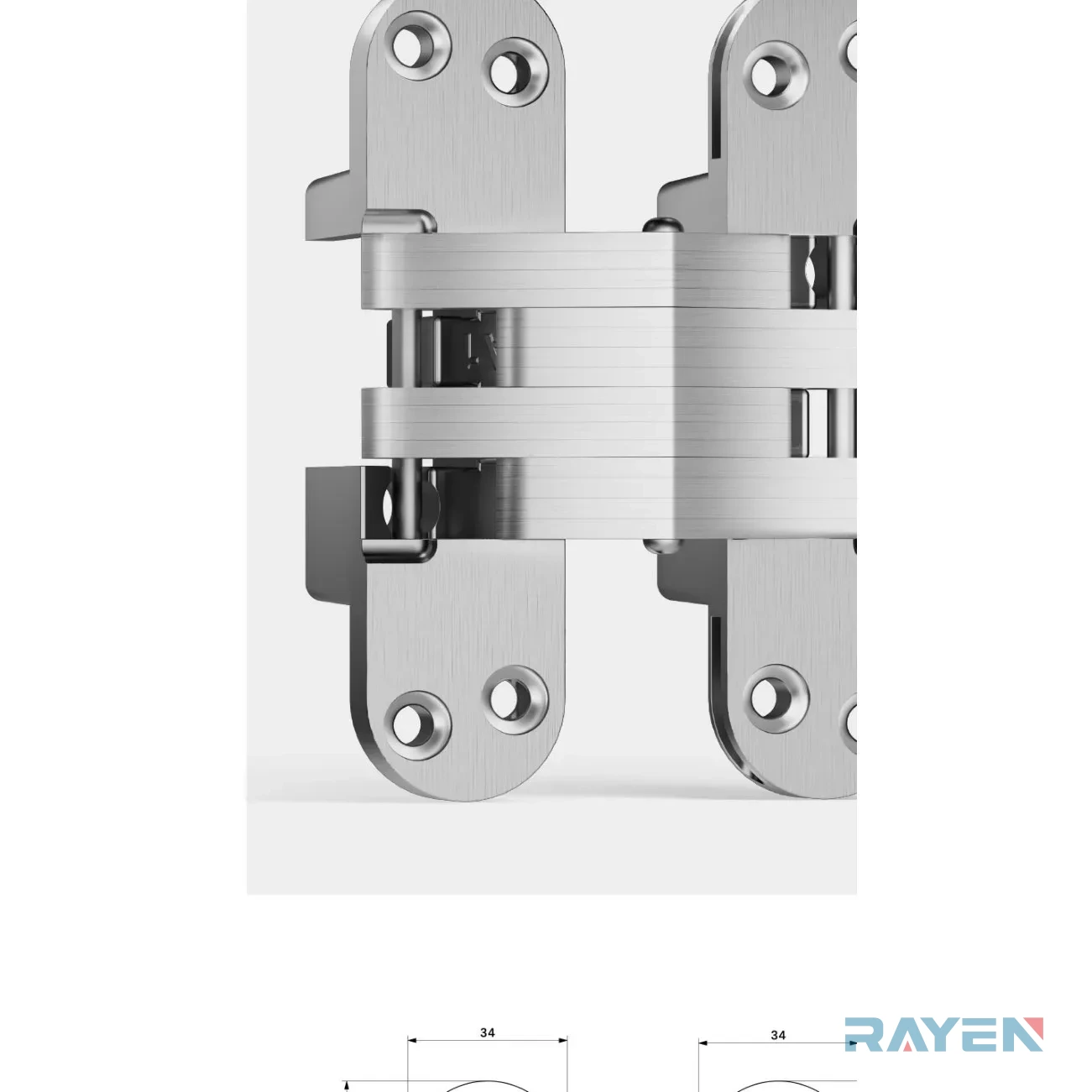
| R-CS100 | 44mm | 100kg | 34x137mm | 1000mm |
| R-CC200 | 45mm | 200kg | 32x240mm | 1000mm |
| R-CS110 | 45mm | 110kg | 35x140mm | 1000mm |
| R-CS110X | 45mm | 110kg | 35x140mm | 1000mm |
| R-CC200J | 48mm | 200kg | 35x235mm | 1000mm |
| R-CC300 | 62mm | 200kg | 51x230mm | 1000mm |
Read down to your door thickness. Every model above that line fits it, and from those, pick the load. For a 38mm door you can choose from R-CS30, R-CS40, R-CS60, R-CS80, RY100, RY150, RY80 and RY177. The strongest of them is RY177, at 120kg on two hinges.
Watch the maximum door width too. R-CS30 stops at 500mm, R-CS40 and R-CS60 at 900mm, and the rest at 1000mm.
Why does door thickness limit the hinge?
Look at R-CS100. Its deeper pocket is 50mm, yet it fits a 44mm door. So the depth is not cut across the thickness. It runs into the door edge, across the width of the door. What the thickness must hold is the hinge body's width, 34mm for this model, with enough timber left on each face. That is why the wider hinges, which carry more, need thicker doors.
What does each routing figure mean?
| Model | Milling cutter diameter | Routing length | Routing depth | Minimum door thickness |
|---|---|---|---|---|
| R-CS30 | Ø16mm | 70&34mm | 7&23mm | 20mm |
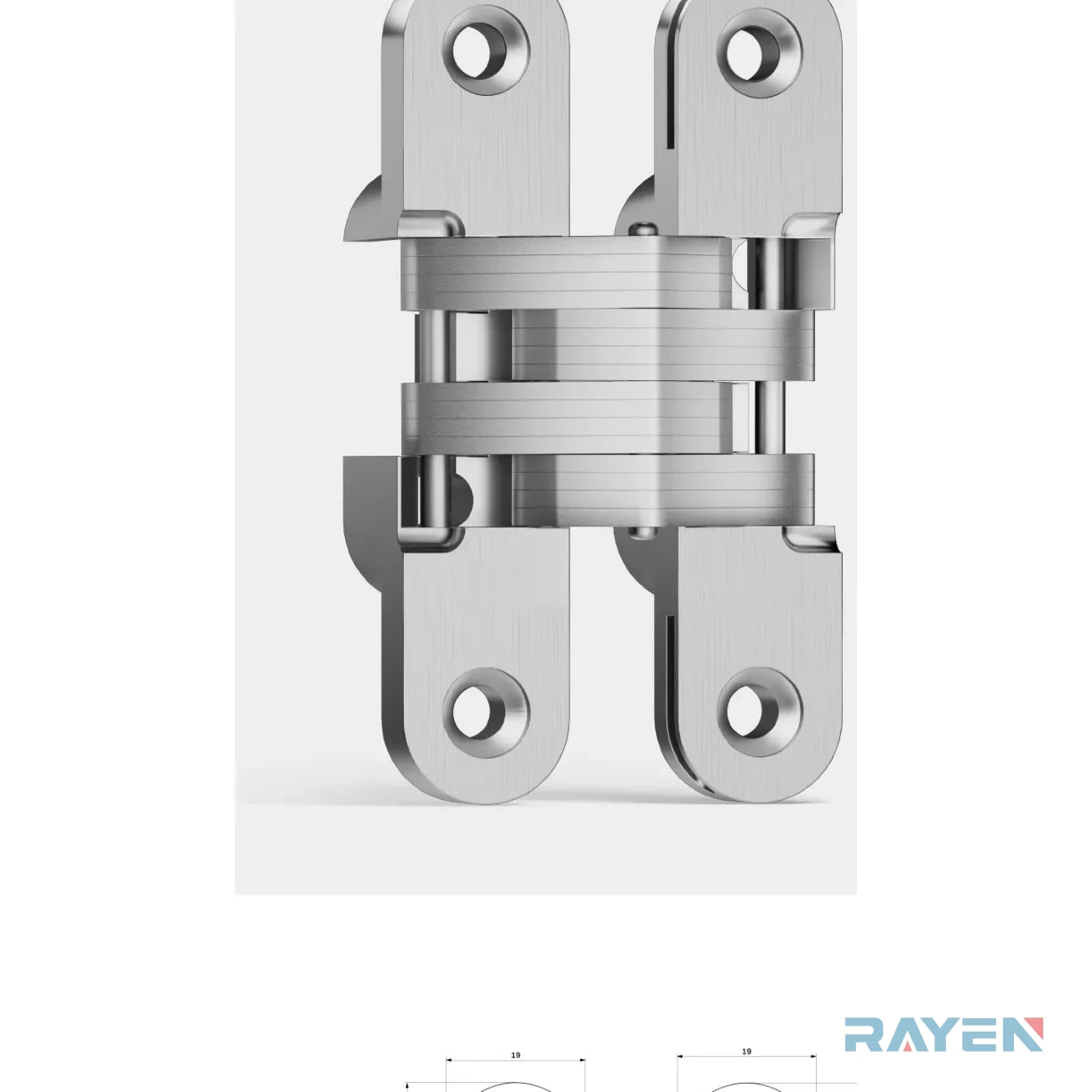
| R-CS40 | Ø19mm | 95&54mm | 10&28mm | 25mm |
| R-CS40X | Ø19mm | 95&54mm | 10&28mm | 25mm |
| R-CS60 | Ø25mm | 117&70.5mm | 11.5&36mm | 33mm |
| RY100 | Ø25mm | 138.8&110mm | 10&30mm | 33mm |
| RY150 | Ø25mm | 119&150mm | 7&22mm | 33mm |
| R-CS80 | Ø28mm | 117&67mm | 10&40mm | 36mm |
| R-CS80X | Ø28mm | 117&67mm | 10&40mm | 36mm |
| RY177 | Ø28mm | 141&177mm | 9.7&26.8mm | 38mm |
| RY80 | Ø29mm | 113&73mm | 7&40mm | 38mm |
| R-CC120J | Ø30mm | 160&127mm | 7.8&32mm | 40mm |
| R-CF120 | Ø30mm | 160&125mm | 10&32.5mm | 40mm |
| RY80J | Ø30mm | 108&161mm | 6&29mm | 40mm |
| RY120 | Ø30mm | 160&125mm | 10&32.5mm | 40mm |
| RY140 | Ø30mm | 99&140mm | 7.5&27mm | 40mm |
| R-CC200 | Ø32mm | 186&240mm | 10&45.5mm | 45mm |
| R-CS100 | Ø34mm | 137&77mm | 12&50mm | 44mm |
| R-CC200J | Ø35mm | 196&235mm / 167&235mm | 9.5&43mm / 7.5&46mm | 48mm |
| R-CS110 | Ø35mm | 140&76mm | 8.5&38mm | 45mm |
| R-CS110X | Ø35mm | 140&76mm | 8.5&38mm | 45mm |
| R-CC300 | Ø51mm | 159&230mm | 11&49mm | 62mm |
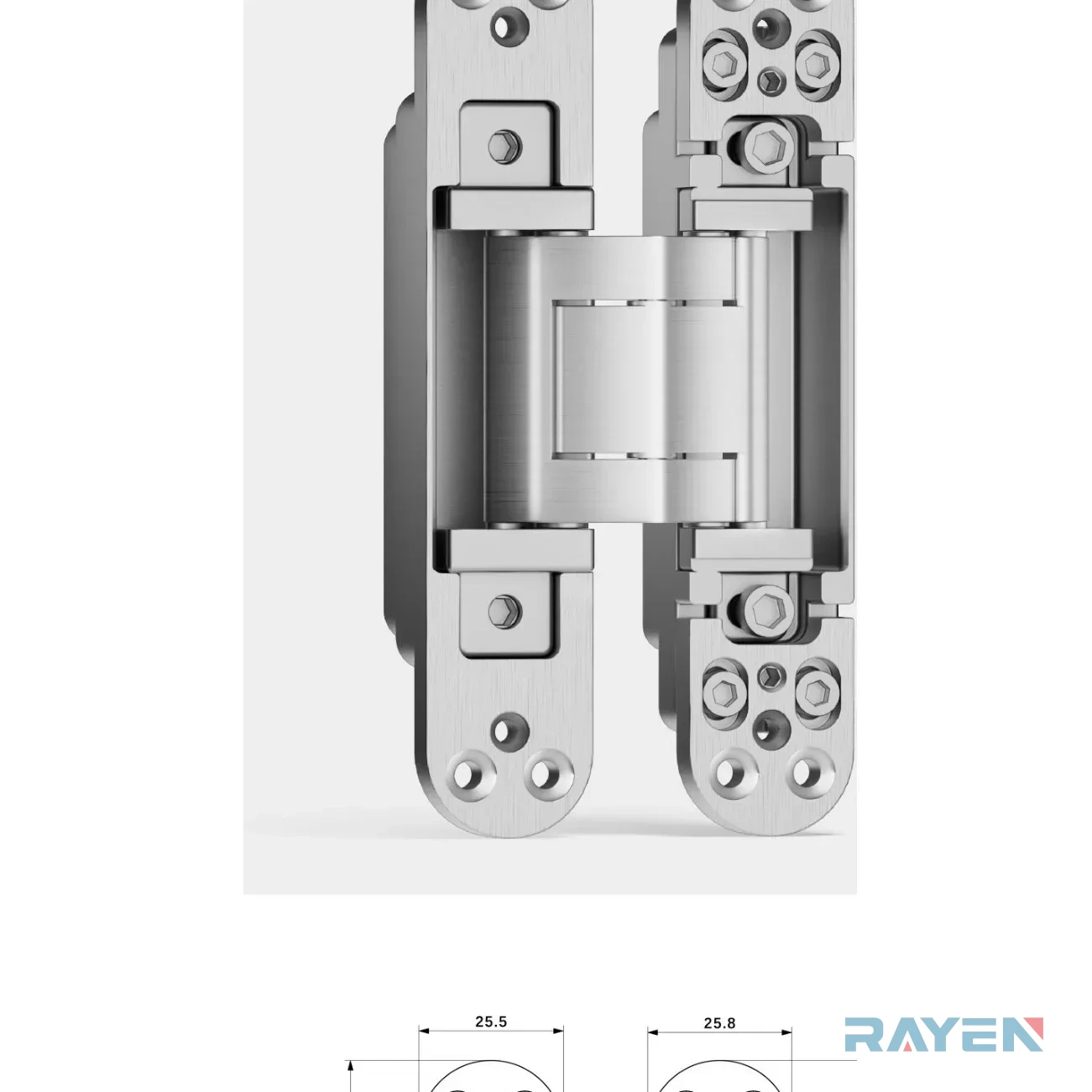
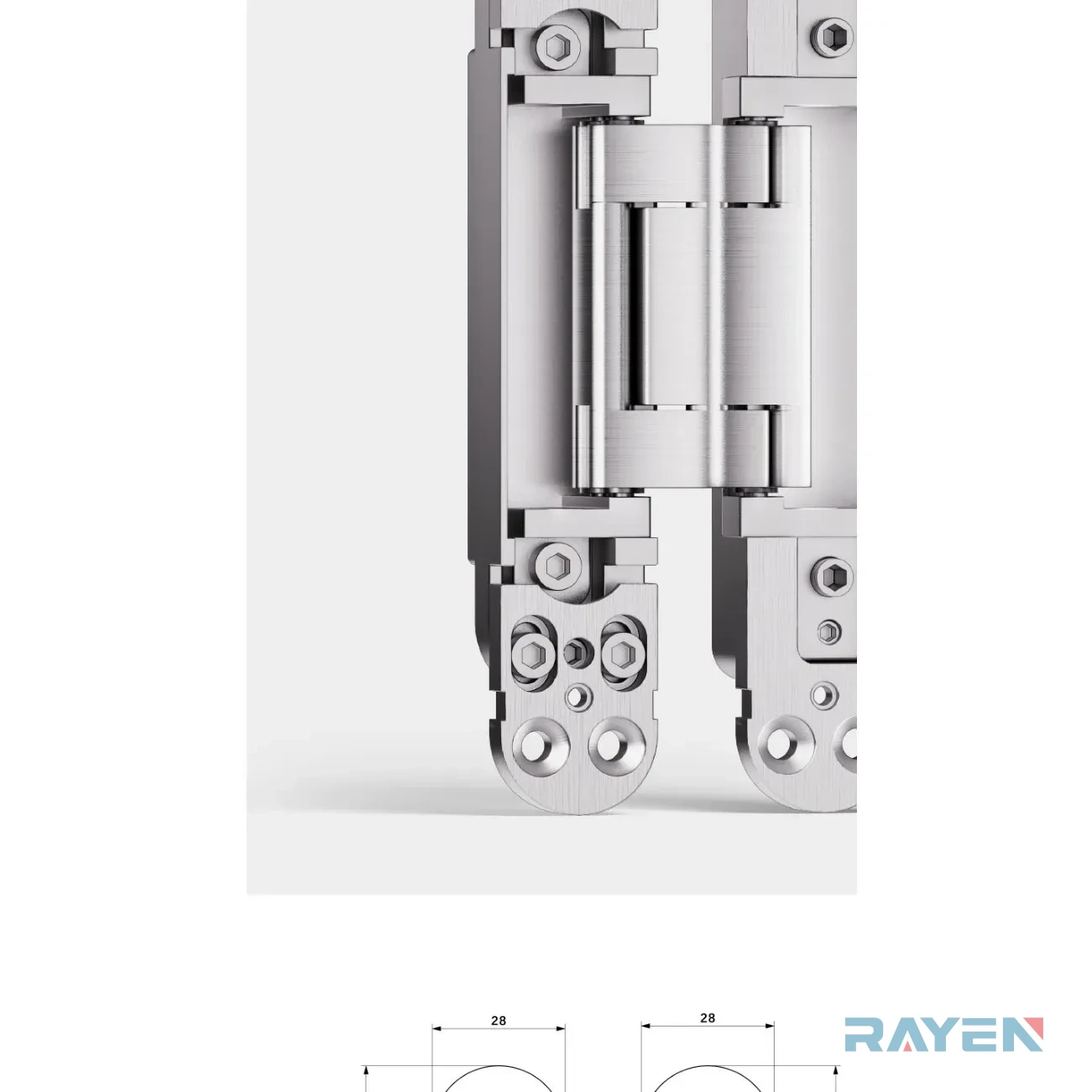
- Milling cutter diameter: always the same as the hinge width, from Ø16mm on R-CS30 to Ø51mm on R-CC300.
- Routing length: two figures, one for each step of the pocket.
- Routing depth: two figures, the shallow step for the face plate and the deep step for the body.
The order of the two figures is not the same on every model, so take the pairing from the drawing. R-CC200J has two sets of figures. Tell us which you are cutting.
How do you rout one, step by step?
- Get the drawing for your model. The positions of the hinges on the door are not printed, so ask for them with the drawing.
- Mark the hinge centres on the door edge and the frame from that drawing.
- Fit a cutter of the hinge width, and set a jig to the long, shallow step.
- Cut the shallow step, then reset for the short, deep step and cut the body pocket.
- Cut the frame the same way. The frame half needs its own pocket.
- Dry-fit one hinge before cutting the rest of the run.
What about adjustment?
Most RY and R-CC models adjust after hanging, up to ±3.0mm up and down, which forgives a small error in the cut. The R-CS models list no adjustment, so cut those exactly. See 3D adjustable concealed hinges.
And the hydraulic concealed hinges?
Their routing is listed differently. RY8001 gives a routing section of 36.2 × 12.2mm with a 5mm edge distance. RY8003 and RY8004 give 130mm long × 42mm deep. RY8002 gives depths of 23.2mm and 35.2mm. See the RY8001 guide.
A worked example
A run of 40mm doors at 85kg needs hidden hinges. Models fitting a 40mm door and carrying more than 85kg are RY100 and RY150 at 100kg, and R-CC120J, R-CF120, RY120, RY140 and RY177 at 120kg. R-CS100 carries 100kg but needs 44mm. Choose RY120: Ø30mm cutter, pocket 160mm and 125mm long, 10mm and 32.5mm deep, with ±3.0mm adjustment up and down.
Which screws do they take?
Screws are not listed with these hinges. Tell us the door and frame material, timber, MDF, aluminium or steel, and we confirm the screws that suit them.
What is the next step?
Send your door thickness, weight, width and frame material to [email protected]. We send the drawing with the pocket and hinge positions for your door. If you are setting up a jig and one figure is unclear, WhatsApp the factory owner. The number is on the contact page. The door hinge selector narrows the range by door.
Open the selection tool:Concealed Hinge Selector
Questions buyers ask
What cutter do I need for a concealed hinge?
A cutter of the hinge width. RY120 is 30mm wide and takes a Ø30mm cutter. R-CS40 is 19mm and takes Ø19mm.
What is the thinnest door a concealed hinge fits?
20mm, with R-CS30: 30kg on two hinges, doors up to 500mm wide.
Is the routing depth measured across the door thickness?
No. The deep figure runs into the door edge. R-CS100 has a 50mm deep step and fits a 44mm door.